Critical Deck Rot Inspection Signs You Might Miss
Nothing signals the start of summer in the Nation’s Capital quite like the smell of a preheating grill on a Friday evening. However, before you invite the whole block over for a burger, you must ensure your outdoor space is structurally sound. A thorough deck rot inspection is the most important task on any Ottawa homeowner’s spring to-do list. Our harsh winters and humid summers create the perfect breeding ground for fungi that eat away at your wooden sanctuary.
Whether you live in a historic home in the Glebe or a newer build in Kanata, wood rot doesn’t discriminate. Moisture trapped under the snowpack often leads to hidden decay that can compromise your safety. By identifying these issues early, you can save thousands in replacement costs and avoid dangerous collapses. This guide will walk you through the four subtle signs of rot that most people miss. We will also look at how the local climate impacts your wood and when to call in professional handyman services for a permanent fix.
Why a Deck Rot Inspection is Vital in Ottawa
The Eastern Ontario climate is notoriously brutal on exterior woodwork. We experience massive temperature swings that cause wood to expand and contract constantly. Furthermore, the “Big Melt” every March leaves standing water in areas you might not notice. This is why a regular deck rot inspection is not just a suggestion; it is a safety requirement. Without it, a joyous family gathering could turn into a structural failure.
Most homeowners only look at the surface of their boards. However, rot usually starts where two pieces of wood meet or where the deck attaches to your house. Additionally, the high humidity of Ottawa summers slows down the drying process after a rainstorm. This prolonged dampness allows wood-destroying organisms to thrive deep within the grain. By the time you see a soft spot on top, the structural joists underneath might already be compromised.
The Impact of the Freeze-Thaw Cycle
In Ottawa, we often see temperatures jump from $-20^{\circ}C$ to $+5^{\circ}C$ in a single week. When water gets into small cracks in your wood and then freezes, it expands, making the cracks larger. Consequently, when the ice melts, even more water enters the wood. This cycle repeats dozens of times every winter, significantly accelerating the decay process compared to milder climates.
Understanding Local Humidity Factors
Summers in the Ottawa Valley are famously humid. This moisture in the air prevents wood from fully “breathing” or drying out. If your deck was built with “builder-grade” pressure-treated lumber, it might only be rated for 15 years. However, without proper deck maintenance Ottawa residents often find their structures failing much sooner. Keeping your deck dry and well-ventilated is the key to longevity.
1. Soft Spots and the “Screwdriver Test”
The most effective tool for a deck rot inspection isn’t a high-tech laser—it is a simple flathead screwdriver. To begin, walk across your deck and look for areas that appear darker than the rest. These “water stains” are often the first physical sign that the internal fibers of the wood are breaking down. Furthermore, check any area where pots or planters have been sitting, as these trap moisture against the wood for months.
Once you find a suspicious spot, press the tip of the screwdriver into the wood. If the wood is healthy, the screwdriver should bounce off or only leave a tiny mark. However, if the tool sinks in easily or the wood feels “spongy,” you have found active rot. This is a clear indicator that the structural integrity is failing and you need immediate wood rot repair.
- Check the Ledger Board: This is the board that attaches the deck to your house. If this rots, the entire deck can pull away from the home.
- Inspect the Joists: Crawl underneath and poke the horizontal beams. Look for “fuzz” or mushroom-like growth.
- Look at the Posts: Check where the wooden posts meet the concrete footings or the soil. Moisture often wicks up from the ground here.
2. Rusty Fasteners and Loose Connections
During your deck rot inspection, do not just look at the wood; look at the metal. In Ottawa’s salty and damp environment, hardware can corrode quickly. If you see rusted screw heads or bolts, it is a sign that moisture is living inside the wood. Rust expands the metal, which creates larger holes in the timber, allowing even more water to seep in.
Furthermore, check for “wobbly” railings or stairs. If a railing feels loose, the wood around the bolts has likely rotted away, leaving the bolt with nothing to grip. This is an extremely common issue in Ottawa home maintenance because railings take the brunt of the wind and snow. Replacing a few bolts might seem easy, but if the wood is soft, those new bolts won’t hold either.
Pro Tip: If you notice “bleeding” or black streaks around your nails and screws, it’s a sign that the chemicals in the pressure-treated wood are reacting with the metal. This usually happens when the wrong type of fastener was used during construction.
3. Persistent Mold and Fungal Growth
Many people mistake green algae for rot. While algae is ugly and slippery, it doesn’t always mean the wood is dying. However, if you see white, grey, or yellow “fuzz” that looks like cotton, you are looking at wood-decay fungi. This is a critical discovery during a deck rot inspection. These organisms literally eat the cellulose that gives wood its strength.
In Ottawa, these fungi love the shaded areas under the deck or behind stairs where the sun never reaches. If you smell a “musty” or “earthy” odour while standing on your deck, the rot is likely happening underneath you. Cleaning the surface with a pressure washer won’t fix this. You must remove the infected wood entirely to stop the spread, much like a surgeon removing a tumor.
- Warning: Never just paint over mold or fungus. This seals the moisture in and actually speeds up the rot.
- Step 1: Scrub the area with a mixture of oxygen bleach and water.
- Step 2: Dry the area thoroughly with a fan.
- Step 3: If the wood is still soft after drying, it must be replaced.
4. Gaps and Flashing Failures
The “flashing” is the metal or plastic strip that sits over the ledger board to direct water away from the house. In many older Ottawa homes, this flashing is either missing, installed upside down, or clogged with debris. During your deck rot inspection, ensure that water is actually flowing away from your foundation. If you see water dripping between the deck and the house wall, your flashing has failed.
When water gets trapped behind the ledger board, it rots the wood of your actual house frame. This can lead to astronomical repair bills involving your home’s rim joist. Meanwhile, check the gaps between your deck boards. In the autumn, these gaps get filled with maple leaves and pine needles from our beautiful local trees. If these aren’t cleared, they turn into a wet “compost” that rots your deck boards from the sides.
How to Save Money on Repairs
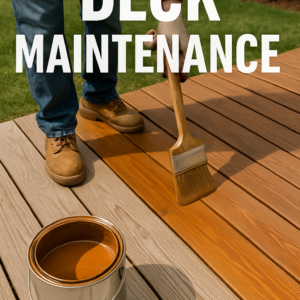
The best way to save money is to catch rot while it is still “localized.” Replacing one or two deck boards is a simple task for professional handyman services. However, waiting until the structural beams are gone could cost you five times as much. Additionally, applying a high-quality, oil-based sealer every two years will provide a waterproof barrier that protects your investment against the Eastern Ontario climate.
DIY vs. Professional Handyman Services
You might be wondering if you can handle these repairs yourself. If the rot is limited to a single non-structural floorboard, a DIY fix is perfectly fine. However, if the rot is located on a post, a joist, or the ledger board, the safety of your family is at risk. Structural wood repair requires specialized tools and an understanding of load-bearing physics.
Hiring a professional handyman services provider ensures that the repair is done to the Ontario Building Code. We know exactly which materials stand up best to Ottawa’s weather, such as cedar or high-end composite. Furthermore, a professional can identify the source of the moisture. There is no point in replacing a board if a leaky gutter is going to rot the new one in six months.
- When to DIY: Sanding, staining, clearing debris, and replacing single surface boards.
- When to call us: Structural instability, wobbly railings, ledger board rot, or if the deck is more than one story high.
Conclusion
A thorough deck rot inspection is the only way to guarantee your outdoor space is ready for the upcoming season. By checking for soft spots with the screwdriver test, inspecting your hardware for rust, watching for fungal growth, and ensuring your flashing is functional, you protect both your home and your guests. Remember, Ottawa’s weather is relentless, and “out of sight” should never mean “out of mind” when it comes to structural wood.
If your inspection turned up some worrying soft spots, don’t panic. At My Ottawa Handyman, we specialize in helping local homeowners maintain their properties without the stress of a full-scale renovation. Whether you need a few joists reinforced or a complete deck refresh, we provide the quality workmanship your home deserves.
Is your deck ready for the grill? Contact My Ottawa Handyman today for a professional safety assessment and let’s get your backyard BBQ-ready!