Silent Leak Plumbing Audit: How to Protect Your Home in 15 Minutes
Most homeowners think a plumbing problem is a big leak under the sink, but it’s often more subtle. It’s the slow drip behind your walls or the unexpected toilet flush at night that causes the most harm over time. Spending just 15 minutes every few months to check your home can help you spot these issues before they escalate into a major problem.
In this guide, you will learn exactly how to identify hidden water paths, test your safety valves, and ensure your appliances aren’t breeding toxic mould. This is professional-grade maintenance made simple for the everyday homeowner.
Why You Need a Silent Leak Plumbing Audit Today
Before we dive into the “how,” we must understand the “why.” Water is a patient destroyer. A leak the size of a pinhead can waste up to 300,000 gallons of water in a single year. More importantly, consistent moisture leads to structural rot and mold growth, which can compromise your family’s health and your home’s resale value.
The Financial Impact of Neglect
When you ignore the signs of a slow leak, you aren’t just paying for the wasted water. You are paying for the eventual replacement of subfloors, cabinetry, and drywall. A professional mold remediation service can cost anywhere from $2,000 to $10,000, while a silent leak plumbing audit costs you absolutely nothing but a few minutes of your time.
The Safety Factor
Plumbing isn’t just about water; it’s about control. If a pipe bursts while you are at work, your ability to stop the flood depends entirely on whether your shut-off valves actually work. If they are seized due to corrosion, a minor inconvenience becomes a total loss.
Step 1: The 5-Minute “Phantom Flush” Toilet Test
The most common source of a hidden leak is the toilet. It’s also the quietest. You might not hear the water running, but the internal “flapper” valve could be worn out, allowing water to flow from the tank into the bowl constantly.
The Dye Test Method
To start your silent leak plumbing audit, remove the lid from your toilet tank. Drop 5-6 drops of dark food coloring (blue or red works best) into the tank water. Do not flush. Wait 10 to 15 minutes.
If you see color seeping into the toilet bowl, your flapper is leaking. This simple fix—replacing a $5 rubber part—can save you over $100 a year on your water bill.
Inspecting the Base
While you wait for the dye test, check the floor around the base of the toilet. Use a dry paper towel and run it along the wax ring area where the toilet meets the floor. If the towel comes back damp, your wax ring has failed. This is a critical discovery; a leaking wax ring will eventually rot your subfloor and cause the toilet to “sink” or wobble.
Step 2: Testing Shut-Off Valves and Supply Lines
Every fixture in your house has a shut-off valve. During your silent leak plumbing audit, you need to ensure these valves actually move. Over time, mineral deposits build up (calcification), locking these valves in the “open” position.
Under-Sink Inspections
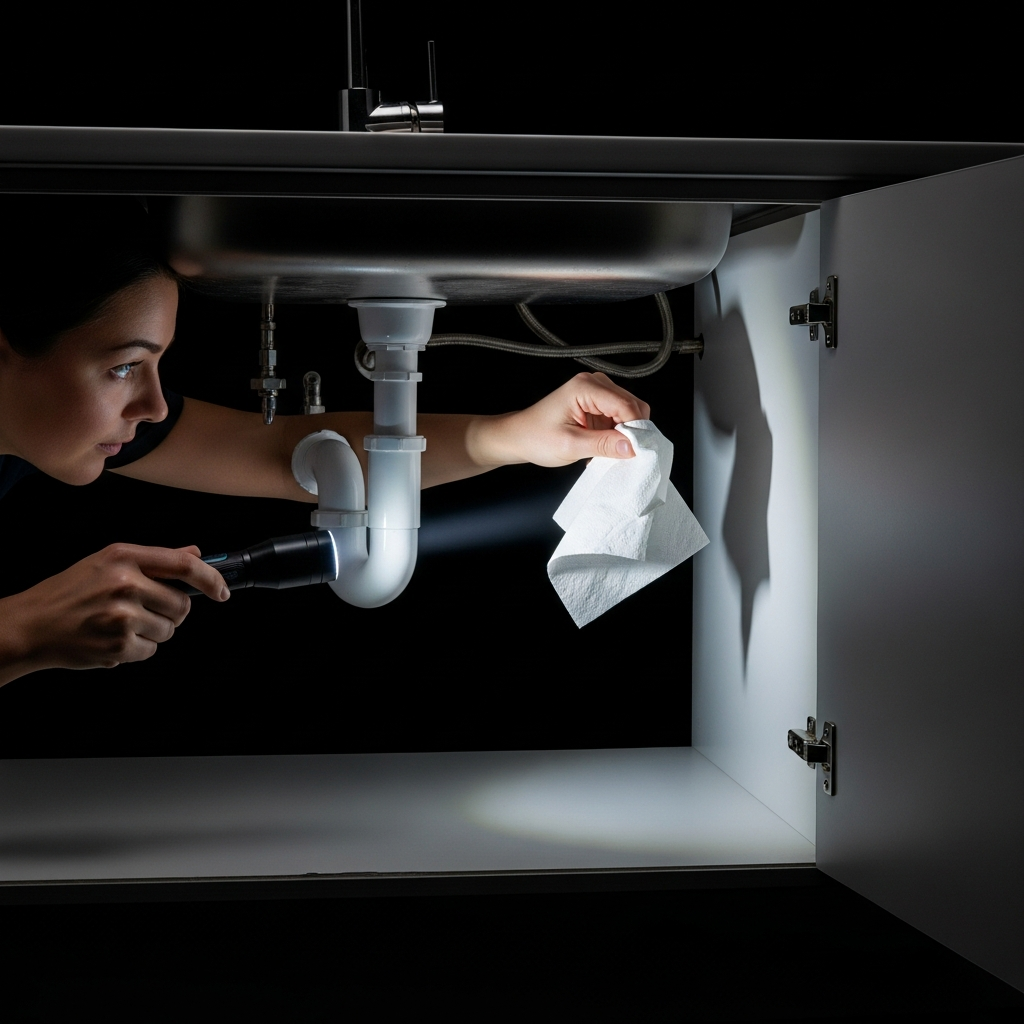
Go under every sink in your home. Look at the “angle stops”—the small silver valves coming out of the wall.
- Check for “Green Crust”: If you see a greenish or white powdery substance on the valve, it is a sign of a slow, evaporating leak.
- The Quarter-Turn Test: Gently try to turn the valve clockwise. If it feels stuck, do not force it, or it might snap. Instead, spray it with a bit of WD-40 and try again later.
- Inspect the Hoses: Look for braided stainless steel lines. If they have any kinks, rust spots, or frayed wires, they are “ticking time bombs” that need immediate replacement.
The Main Water Shut-Off
Do you know where your main water shut-off valve is? It’s usually located in the basement, crawlspace, or near the water meter. As part of your audit, ensure the area around it is clear and that you can turn it easily. If a pipe bursts, this is your “kill switch.”
Step 3: Spotting Mould and Leaks Behind Appliances
Appliances like dishwashers and refrigerators with icemakers are notorious for hidden leaks. Because they are pushed back against the wall, you rarely see the damage until the floorboards start to warp.
The Dishwasher Kickplate Check
Most dishwashers have a removable metal panel at the bottom called a kickplate. Unscrew this panel and use a flashlight to look underneath. Look for:
- Standing water or damp insulation.
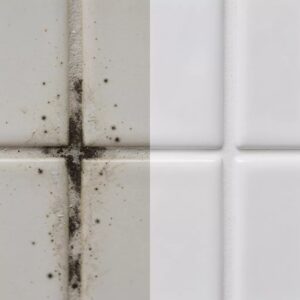
- Dark spots on the wood (mould).
- Evidence of “pitting” on the copper or plastic lines.
The Refrigerator “Dust and Damp” Check
Pull your refrigerator out six inches. Check the plastic water line leading to the icemaker. These lines are often made of thin plastic that can become brittle and crack. If you see a small puddle or dark staining on the wall behind the fridge, you’ve found a hidden enemy.
Step 4: The Ultimate “Meter Test” for Total Peace of Mind
If you want to be 100% sure your silent leak plumbing audit is thorough, you must use the water meter as your ultimate detective.
- Turn off all water: Ensure no one is using the shower, the dishwasher isn’t running, and the irrigation is off.
- Locate your meter: Look for the “leak indicator”—usually a small red or silver triangle or a digital readout.
- The Waiting Game: If the indicator is spinning even slightly while all water is off, you have a leak. If you can’t see a leak indicator, record the numerical reading and come back in 30 minutes. If the number has changed, water is escaping somewhere in your system.
Common Mistakes to Avoid During Your Audit
- Overtightening Valves: When testing shut-off valves, don’t use a wrench to force them shut. You can crush the internal seal and create a brand-new leak.
- Ignoring “Musty” Smells: If a room smells like a damp basement, there is moisture present. Don’t assume it’s just “old house smell.”
- Forgetting the Water Heater: Check the “T&P” (Temperature and Pressure) valve on your water heater. If there is a puddle under the discharge pipe, the valve is failing.
Frequently Asked Questions About Silent Leaks
Q: What is a silent leak plumbing audit? A: It is a systematic, 15-minute DIY inspection of your home’s plumbing fixtures, valves, and appliances to identify hidden water leaks before they cause structural damage or high utility bills.
Q: How do you check for a toilet leak without calling a plumber? A: Use the food coloring test. Place a few drops of dye in the tank and wait 15 minutes. If color appears in the bowl without flushing, your flapper valve needs to be replaced.
Q: How much does a hidden water leak cost the average homeowner? A: A small leak can add $20–$50 to your monthly water bill, but the secondary damage (mould and rot) can cost between $2,000 and $15,000 to repair depending on the severity.
Q: Why is mould growing behind my dishwasher? A: This is usually caused by a slow leak in the supply line or a faulty door seal. High humidity in the enclosed space under the counter creates a perfect breeding ground for mould spores.
Q: What tools do you need for a plumbing audit? A: You only need a few basic items: a flashlight, food coloring, dry paper towels, and perhaps a screwdriver to remove appliance kickplates.
Q: How often should I test my main water shut-off valve? A: It is best practice to test all shut-off valves at least twice a year. This prevents “mineral freezing” and ensures you can turn off the water during an emergency.
Conclusion: Take Action Before the Drip Becomes a Flood
Performing a silent leak plumbing audit is an essential habit for any responsible homeowner. By dedicating just 15 minutes to checking your toilets, valves, and appliances, you move from being a reactive homeowner to a proactive one. You aren’t just saving money on your water bill; you are protecting the structural integrity of your largest investment.
Your next step is simple: Go to your kitchen right now and check the area under the sink with a paper towel. If it’s dry, move to the bathroom and start the dye test. These small actions create a “leak-proof” mindset that will serve you—and your wallet—for years to come. You have the tools and the knowledge; now, go secure your home!