Hidden Enemies, Caulking: The Silent Threat to Your Home
Your home is your fortress, but even the strongest fortresses have microscopic vulnerabilities. While you might worry about roof leaks or basement flooding, the most devastating damage often begins with something far smaller and more insidious. We are talking about hidden enemies, caulking failures that quietly allow moisture, pests, and air to infiltrate your living space. This thin bead of flexible material is the only thing standing between your structural integrity and the unforgiving elements, yet it is frequently the most overlooked component of home maintenance.
When caulking fails, it doesn’t usually announce itself with a bang. Instead, it pulls away from the substrate in microscopic increments, creating a highway for water. By the time you notice a soft spot in the drywall or a musty scent in the bathroom, the “hidden enemy” has already been at work for months. In this 2026 guide, we will explore why hidden enemies, caulking issues are so dangerous, how to identify failing seals before they cause thousands in damage, and the professional techniques you need to seal your home effectively.
Understanding the Hidden Enemies: Caulking Failures
To defeat an enemy, you must first understand it. Caulking is a joint filler used in areas where two different materials meet—such as where a bathtub meets a tile wall or where window trim meets siding. Because materials expand and contract at different rates due to temperature changes, caulk must remain flexible.
The “hidden” nature of these enemies stems from the fact that caulk often looks fine on the surface while having completely lost its bond underneath. This is known as adhesive failure. When this happens, the caulk stays in place, but it is no longer watertight. Water seeps behind the bead, gets trapped against wood or drywall, and begins the slow process of rot and mold cultivation.
Why Caulking Fails
- UV Degradation: Exterior caulk is bombarded by solar radiation, which breaks down the chemical bonds, making it brittle.
- Structural Settling: As houses shift, joints can widen beyond the caulk’s maximum elongation capability.
- Improper Application: Applying new caulk over old, dirty, or wet surfaces ensures an early failure.
The True Cost of Neglect: Water Damage and Mold
Why should you care about a tiny crack in your window seal? Because hidden enemies, caulking issues are the primary precursors to major insurance claims. Water is a patient destroyer. Once it finds a path through a failed seal, it follows gravity, often traveling several feet away from the initial leak before manifesting as a visible problem.
Structural Rot
When water infiltrates the envelope of your home through failed exterior caulking, it settles into the wooden framing. In the humid climates we are seeing in 2026, this moisture creates the perfect environment for wood-decay fungi. Over time, the very studs holding up your walls can turn into a substance with the consistency of wet cardboard.
The Mold Connection
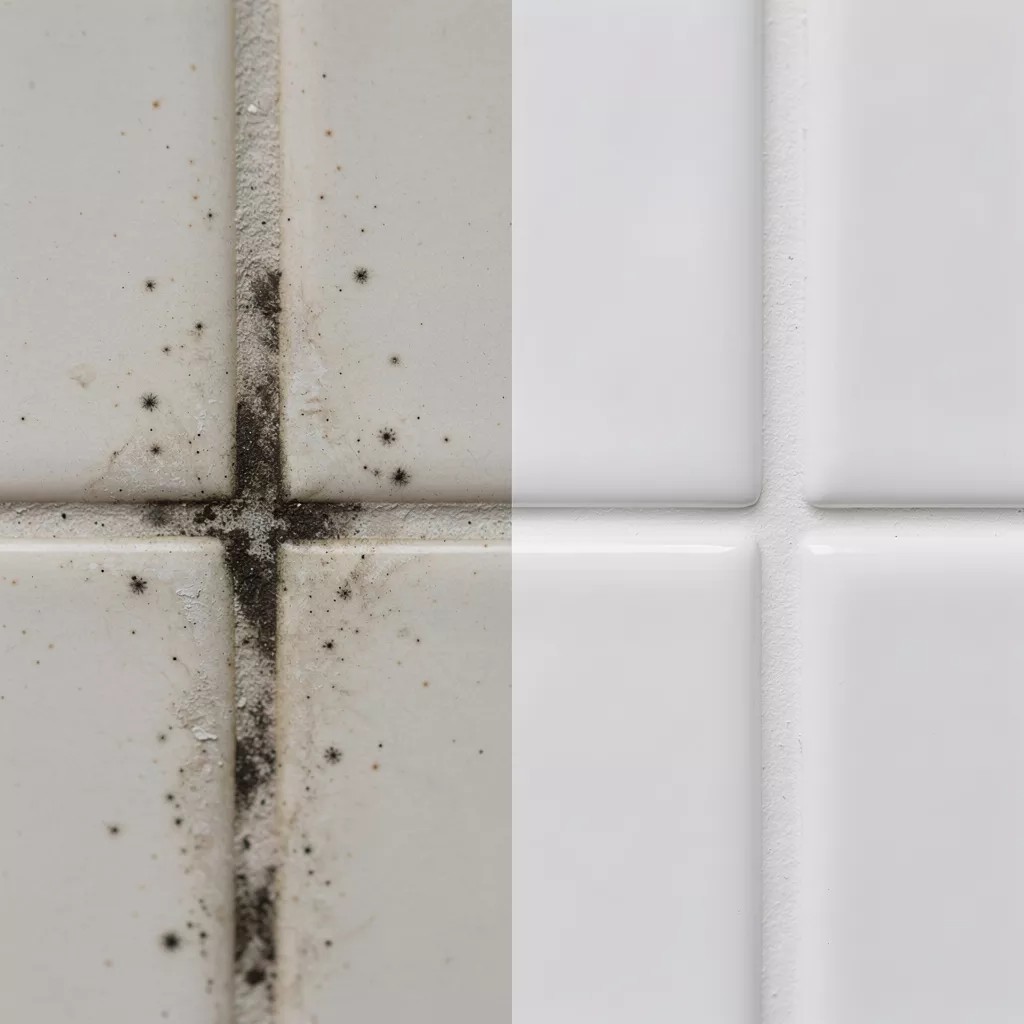
In bathrooms and kitchens, failing caulk leads to mold growth behind the walls. This isn’t just an aesthetic issue; it is a significant health hazard. Black mold (Stachybotrys chartarum) can trigger respiratory issues and allergic reactions. Because the mold is growing behind the caulk or inside the wall cavity, you may be breathing in spores long before you see a single black speck.
Identifying Failing Caulk Before It’s Too Late
To protect your home, you must become a detective. You cannot wait for a leak to appear on the ceiling. Instead, you must perform a “seal audit” at least twice a year—ideally in the spring and fall.
Signs of Failing Caulk to Watch For:
- The “Pocket” Test: If you can slide a thin credit card or a fingernail between the caulk and the surface it’s supposed to be sticking to, the seal is dead.
- Discoloration: Yellowing or browning often indicates that moisture has begun to collect behind the sealant.
- Brittleness: If the caulk feels hard like plastic rather than rubbery, it can no longer handle the house’s movement.
- Peeling or Cracking: Even hairline cracks are wide enough for liquid water to enter via capillary action.
DIY Guide: Defeating the Hidden Enemies, Caulking
If you have identified failing seals, it is time to take action. Replacing caulk is one of the most cost-effective DIY tasks a homeowner can perform. For the price of a $10 tube of high-quality sealant, you can prevent a $5,000 repair bill.
Step 1: Total Removal
Never, ever apply new caulk over old caulk. The new layer will not bond to the old, creating a layered mess that still allows water to pass through. Use a caulk removal tool or a sharp utility knife to strip the joint clean.
Step 2: Surface Preparation
Once the old material is gone, you must clean the area. For bathrooms, use a mixture of bleach and water or a specialized mold killer to ensure no spores are trapped under the new bead. For exterior surfaces, use denatured alcohol to remove oils and dust. The surface must be bone-dry before you proceed.
Step 3: Choosing the Right Weapon
Not all caulk is created equal. Using the wrong type is how many hidden enemies, caulking problems begin.
- Silicone: Best for wet areas (tubs, sinks). It is highly flexible and waterproof but cannot be painted.
- Polyurethane: The “gold standard” for exterior windows and siding. It is incredibly durable and UV-resistant.
- Acrylic Latex (Sill): Best for interior baseboards and crown molding where aesthetics and paintability matter more than water resistance.
Step 4: The Perfect Bead
Cut the nozzle of your caulk gun at a 45-degree angle. The opening should be slightly smaller than the width of the gap you are filling. Push the gun forward (don’t pull) to force the sealant into the joint. Smooth the bead immediately with a gloved finger or a caulking tool dipped in soapy water.
Expert Insights: The 2026 Standards for Home Weatherization
Modern building science has changed how we view the home envelope. In 2026, we focus on “thermal bridging” and “air infiltration.” Failing caulk isn’t just a water issue; it’s an energy issue.
According to recent Department of Energy data, air leaks through failed seals around windows and doors can account for up to 15% of a home’s heating and cooling loss. By addressing these hidden enemies, caulking gaps, you are essentially “tightening” your home’s thermal envelope. This reduces the load on your HVAC system and lowers your monthly utility bills.
The Rise of High-Performance Sealants
In the last few years, hybrid sealants (combining the best of silicone and polyurethane) have become the industry standard. These “STPE” (Silyl-Terminated Polyether) sealants offer the extreme weather resistance of silicone but remain paintable and have much higher adhesion strengths. If you are doing a full exterior refresh, these are the products professionals recommend.
Common Mistakes to Avoid
Even with the best intentions, homeowners often fall into traps that revive the hidden enemies they were trying to banish.
- Using “Cheap” Caulk: The difference between a $3 tube and a $12 tube is the quality of the resins. Cheap caulk will shrink and crack within 12 months. Spend the extra money for a 25-year or 50-year rated product.
- Ignoring the Weather: Applying exterior caulk when it’s too cold (below 40°F) or when rain is expected within 24 hours will lead to premature bond failure.
- Too Much Tooling: Over-smoothing the caulk can make the bead too thin. A thin bead doesn’t have enough material to stretch when the joint moves, causing it to snap.
Frequently Asked Questions About Caulking
Q: What is the primary cause of hidden enemies, caulking failures?
A: The most common cause is a combination of UV exposure and structural movement. Over time, the sun makes the caulk brittle, and when the house naturally shifts or expands with temperature changes, the brittle caulk cracks or pulls away from the surface.
Q: How do you identify hidden enemies, caulking issues?
A: You can identify them by performing a visual and tactile inspection. Look for peeling, discoloration, or gaps. Use a small tool to see if the caulk is still firmly adhered to the substrate; if it pulls away easily, the seal is compromised.
Q: How much does it cost to recaulk a house?
A: For a DIY project, you will likely spend between $50 and $150 on high-quality materials and tools. Hiring a professional to recaulk all windows and doors typically costs between $500 and $1,500 depending on the size of the home.
Q: How long does caulk take to dry?
A: While caulk may feel dry to the touch in 30 minutes, most products require 24 to 48 hours to fully “cure” before they can be exposed to heavy water or painted. Silicone usually cures faster than polyurethane.
Q: Is silicone better than latex caulk?
A: It depends on the application. Silicone is superior for waterproofing and flexibility in bathrooms, but latex is better for interior trim because it can be painted and is easier to clean up during installation.
Q: Why is my new caulk turning black?
A: This is usually a sign of mildew or mold growing under or on the caulk. It happens if the surface wasn’t properly disinfected before application or if you used a product without sufficient antimicrobial additives.
Conclusion
The hidden enemies, caulking failures represent a classic case of “an ounce of prevention is worth a pound of cure.” It is easy to ignore a small crack in your shower or a gap in your window trim, but doing so invites a cascade of structural issues that are expensive and stressful to fix. By taking the time to audit your home’s seals and applying high-quality modern sealants, you are protecting your greatest investment from the inside out.
Don’t let these silent threats win. Grab a flashlight, walk around your home this weekend, and look closely at the joints. If you see gaps, remember that water sees them too—and it’s already looking for a way in.