You’ve finished framing the walls, the electrical is rough-in, and now you face the classic renovator’s dilemma: what do you do with the ceiling? The choice of a T-Bar vs drywall ceiling is more than just an aesthetic decision; it dictates your budget, your construction timeline, and how easily you can access your home’s vital systems in the future.
For decades, the battle has been between the utility of the suspended grid and the seamless beauty of painted gypsum. But with 2026 material prices fluctuating and new modern design options available, the “standard” choice isn’t so obvious anymore. Whether you are finishing a basement, fitting out a home office, or renovating a commercial space, this guide breaks down the real costs and considerations you need to know.
In this comprehensive guide, we will compare costs per square foot, analyze installation difficulties, and reveal which method actually adds more value to your property. By the end, you will know exactly which ceiling system fits your specific needs.
Understanding the Basics: T-Bar and Drywall Defined
Before diving into the costs, it is important to clarify exactly what we are comparing.
What is a T-Bar Ceiling?
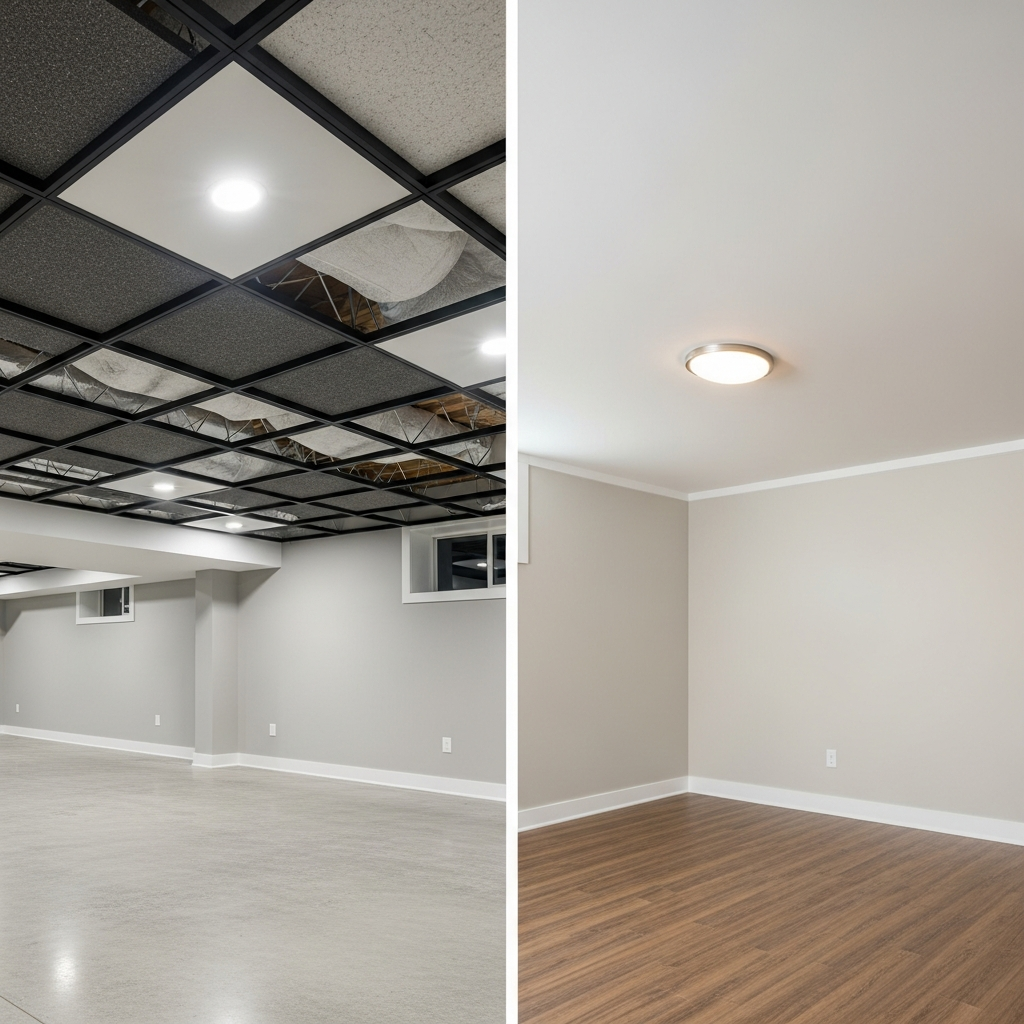
Commonly known as a drop ceiling or suspended ceiling, this system consists of a metal grid (the “T-Bar”) suspended by wires from the floor joists above. Lightweight tiles or panels are then “dropped” into this grid. It creates a plenum space between the structural ceiling and the visible surface, perfect for hiding messy ductwork and pipes.
What is a Drywall Ceiling?
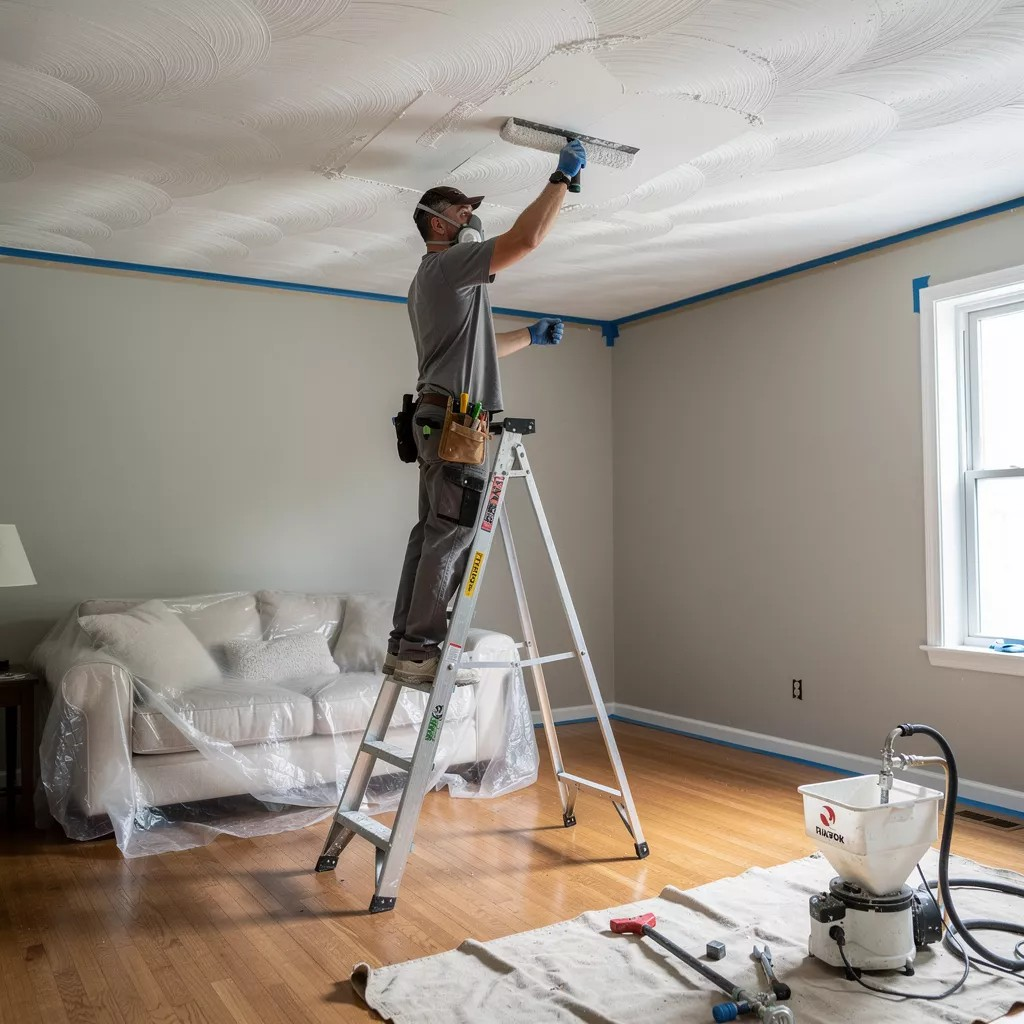
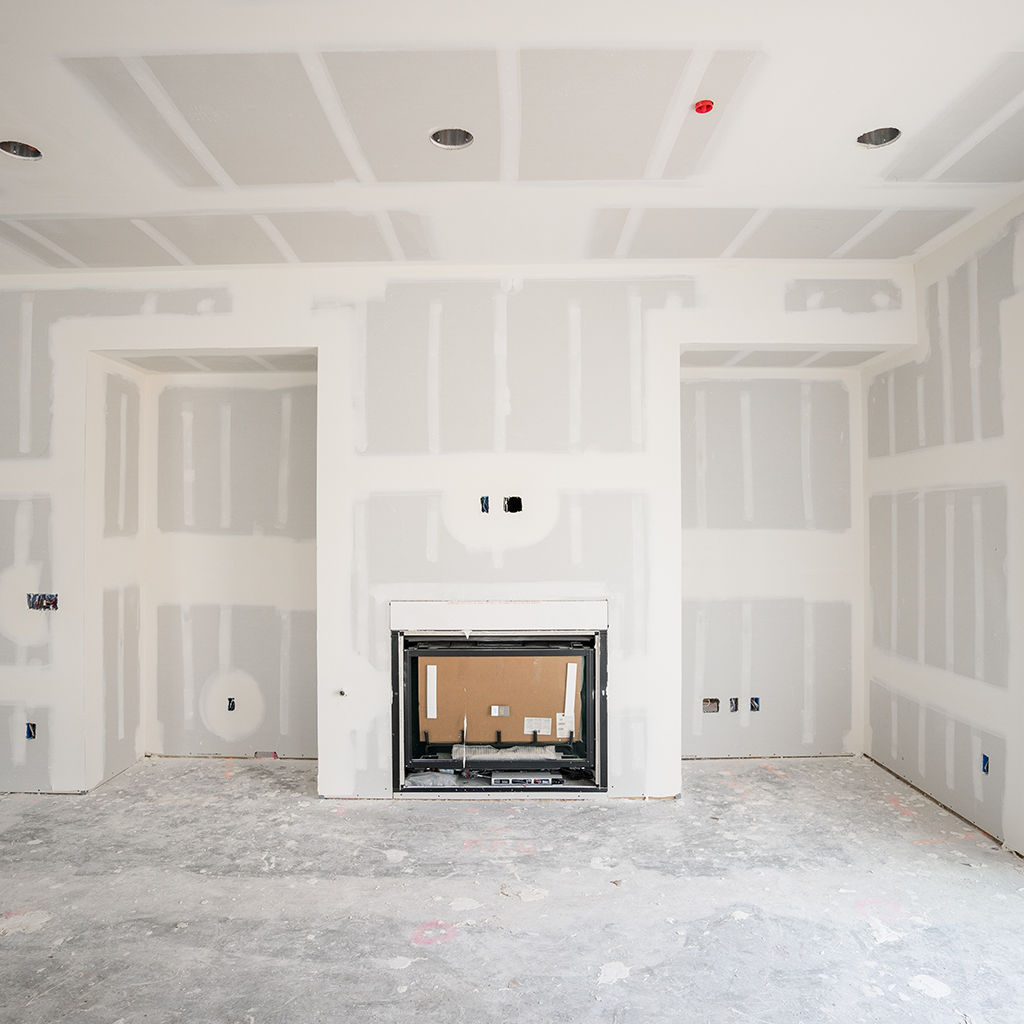
A drywall ceiling uses sheets of gypsum board (usually 1/2-inch or 5/8-inch thick) screwed directly into the joists or a strapping system. The seams are taped, mudded, sanded, and painted to create a smooth, continuous surface that looks exactly like the walls in the rest of your home.
2026 Cost Comparison: T-Bar vs Drywall Ceiling
The most common question homeowners ask is: Which is cheaper? In 2026, the answer might surprise you. While drywall materials are cheap, the labor is intensive. Conversely, T-Bar materials are pricey, but labor is faster.
Here is the breakdown of the T-Bar vs drywall ceiling costs for 2026:
Estimated Cost Per Square Foot (Installed)
| Cost Factor | Drywall Ceiling | T-Bar (Drop) Ceiling |
| Materials | $0.60 – $0.90 / sq. ft. | $2.00 – $6.00+ / sq. ft. |
| Labor | $2.50 – $4.00 / sq. ft. | $2.00 – $5.00 / sq. ft. |
| Finishing (Paint/Texture) | $0.50 – $1.00 / sq. ft. | Included in material |
| TOTAL ESTIMATE | $3.60 – $5.90 / sq. ft. | $4.00 – $11.00 / sq. ft. |
Key Takeaway: A basic drywall ceiling is often cheaper upfront than a drop ceiling because T-Bar grids and tiles have become significantly more expensive. However, if your ceiling requires complex framing (bulkheads/soffits) to hide pipes, the labor cost for drywall skyrockets, potentially making T-Bar the more economical choice for complex basements.
Installation Process & Timeline
Time is money, especially if you are paying contractors by the hour or living in a construction zone.
Drywall Installation: The Messy Marathon
Installing a drywall ceiling is a multi-stage process that cannot be rushed.
- Framing: You must frame out soffits around low-hanging ducts.
- Boarding: Heavy lifting is required to screw sheets overhead.
- Taping & Mudding: Requires 3 distinct coats, with 24 hours of drying time between each.
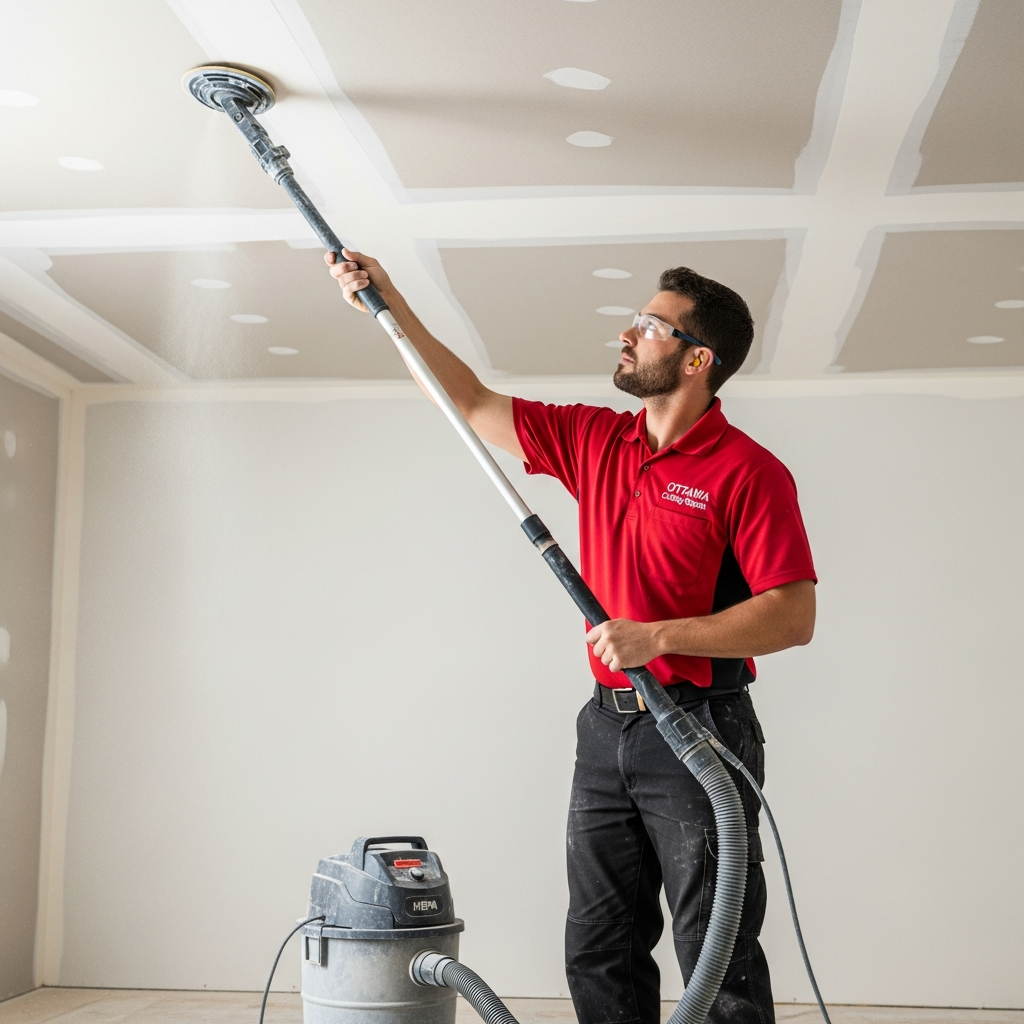
- Sanding: Creates massive amounts of fine dust that travels everywhere.
- Painting: Prime and paint (2 coats).
- Timeline: 5-8 days minimum due to drying times.
T-Bar Installation: The Clean Sprint
The T-Bar system is a “dry” installation.
- Angle Molding: Perimeter tracks are installed.
- Grid Suspension: Main runners and cross tees are hung and clicked together.
- Tile Drop: Tiles, lights, and vents are placed into the grid.
- Timeline: 1-2 days. No drying time, no dust, no painting.
Functionality Comparison: Access vs. Aesthetics
When choosing between T-Bar vs drywall ceiling, you must weigh practical function against visual appeal.
1. Accessibility to Utilities
- T-Bar: This is the undisputed king of utility. If a pipe leaks or you need to run a new ethernet cable, you simply push up a tile. It is non-destructive and instant.
- Drywall: Access is zero. If you need to reach a shut-off valve or fix a leak, you must cut a hole in the ceiling, repair the plumbing, patch the hole, re-mud, re-sand, and re-paint.
2. Ceiling Height (Headroom)
- T-Bar: You will lose a minimum of 3 to 4 inches of headroom to allow space to tilt the tiles into place. In a low basement, this can be a dealbreaker.
- Drywall: Can be installed directly to the joists (or strapping), maximizing every inch of height.
3. Aesthetics
- T-Bar: Traditionally looks “industrial” or like an office. However, 2026 trends show a rise in “architectural” grids, black matte finishes, and faux-wood tiles that look incredibly high-end.
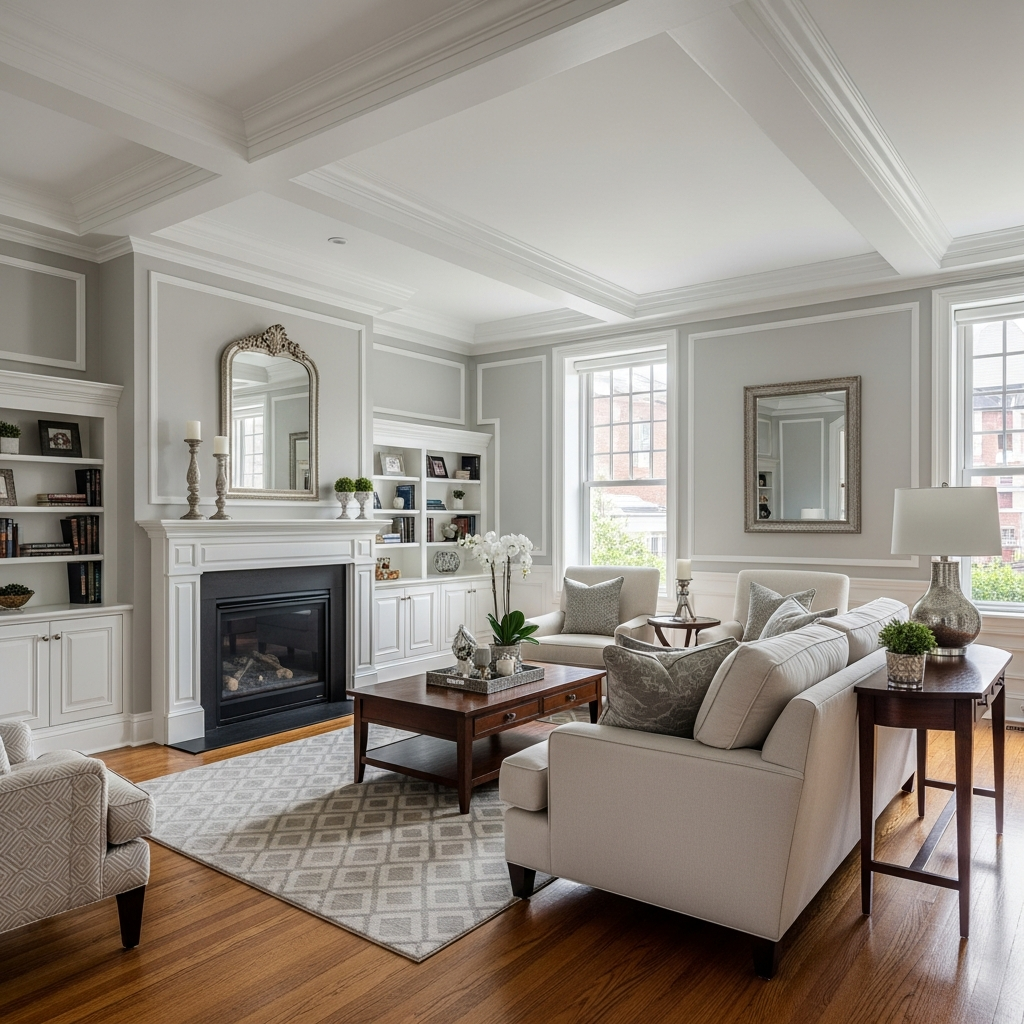
- Drywall: Provides a clean, residential look that matches the upper floors. It makes a basement feel like a true extension of the home rather than a secondary utility space.
Acoustics: Which is Quieter?
Sound control is critical, especially if your renovation is for a home theater or a rental suite.
T-Bar Capabilities
Acoustic tiles are designed specifically to absorb sound within the room (NRC rating). This reduces echo and makes speech clearer, which is great for offices or home theaters. However, lightweight tiles are poor at blocking sound from traveling upstairs (STC rating) unless you buy expensive high-density tiles.
Drywall Capabilities
Drywall is dense and heavy. It is naturally good at blocking sound transmission between floors. For superior soundproofing, you can use “sound-bar” (resilient channel) and two layers of drywall with Green Glue. This setup is generally superior to T-Bar for preventing footstep noise from disturbing the room below.
Pros and Cons Summary
Drywall Ceiling
Pros:
- Clean, seamless, high-value aesthetic.
- Maximizes ceiling height.
- Cheaper material costs.
- Better at blocking noise transfer between floors.
Cons:
- Zero access to pipes/wires without cutting.
- Installation is messy (dust) and slow.
- Water leaks cause permanent damage requiring repainting.
T-Bar (Drop) Ceiling
Pros:
- Instant access to mechanical systems (perfect for basements).
- Fast, clean installation.
- Easy to repair (just swap a water-stained tile).
- Excellent echo reduction inside the room.
Cons:
- Reduces ceiling height by 3-5 inches.
- Generally more expensive per square foot for nice tiles.
- Can look “commercial” if cheap tiles are used.
Frequently Asked Questions About Ceiling Installation
Q: What is a T-Bar vs drywall ceiling regarding resale value?
A: generally, drywall ceilings offer better resale value for residential homes because they look like finished living space. T-Bar ceilings can sometimes signal “unfinished basement” to buyers, unless high-end architectural tiles are used.
Q: Can I switch from a drop ceiling to drywall later?
A: Yes, but it requires demolition. You would need to remove the grid and tiles, then likely frame around obstructions that the drop ceiling was hiding, before installing the drywall.
Q: How much does it cost to repair a water leak?
A: With a T-Bar ceiling, a repair costs about $5 (the price of one new tile). With drywall, a professional patch and paint job can cost $300 to $500 depending on the size of the damage and paint matching.
Q: Is T-Bar installation hard for beginners?
A: It requires precision leveling, but it is very DIY-friendly because it doesn’t require the “artistic” skill of mudding and taping. If you make a mistake with the grid, you can unclasp and move it; drywall mud mistakes are harder to fix.
Q: Which is better for a home theater?
A: A T-Bar ceiling with high-NRC (Noise Reduction Coefficient) acoustic tiles is often better for the interior sound quality of a theater, as it kills echo. However, you must insulate the joists above heavily to stop the bass from shaking the rest of the house.
Q: Do I need a permit for a new ceiling?
A: Usually, replacing a ceiling finish doesn’t require a permit, but if you are adding new electrical lighting or altering the structure/framing, a permit is likely required. Always check local building codes.
Conclusion
The decision between a T-Bar vs drywall ceiling ultimately comes down to the room’s purpose and your tolerance for future maintenance.
If you are renovating a living room, bedroom, or kitchen where aesthetics are paramount and maximum height is needed, drywall is the superior choice. It boosts property value and offers a seamless look. However, for basements, laundry rooms, or areas with heavy mechanical systems overhead, a T-Bar system offers peace of mind that no drywall ceiling can match. The ability to instantly access a leaking pipe or run a new cable without creating a mess is a luxury that often outweighs the sleek look of gypsum.
Ready to start your project?
Begin by looking up at your exposed joists. If you see water valves, junction boxes, and complex ductwork that hangs below the joists, lean toward T-Bar. If the bay is relatively clear, go for the high-value look of drywall.